


Make / Model Search

OptionsCar reviews - Foton - Tunland - V7Foton modelsOverviewWe like Affordable, well proportioned, terrific standard specifications Room for improvement Engine can feel small, laggy gear shifts, jiggly leaf sprung ride Plus-sized mild-hybrid diesel Foton V7-C is a lot of ute for the money22 Jan 2026 Overview
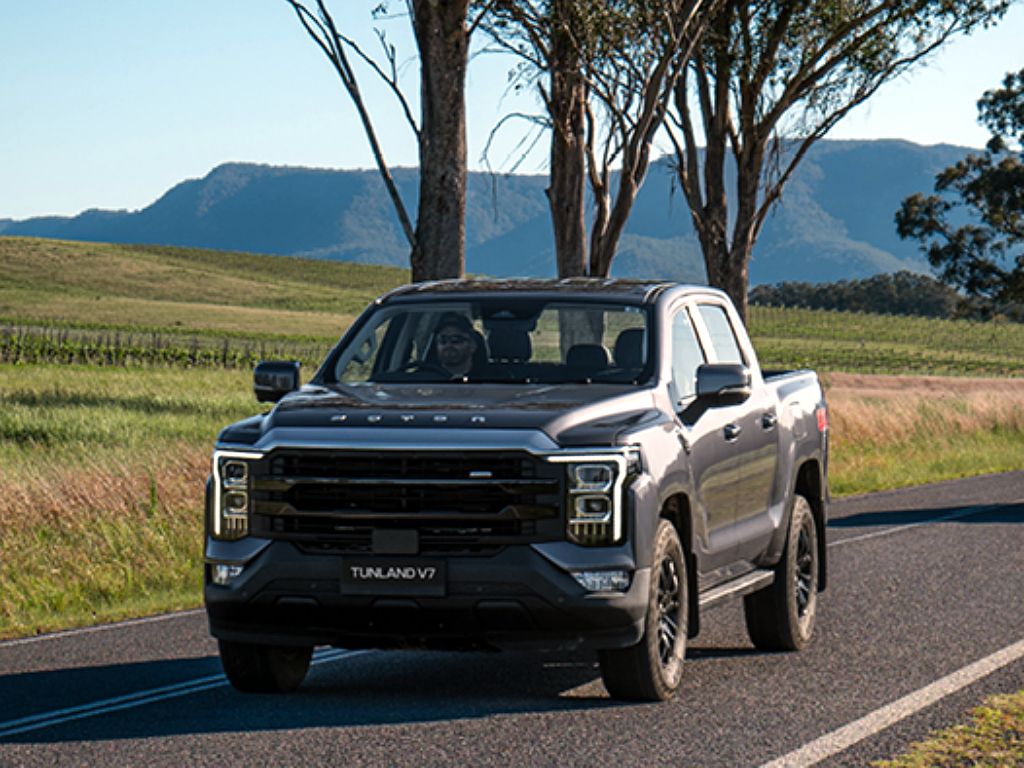
THE profusion of “plus sized” one-tonne utes continues with the arrival late last year of the four model diesel/electric mild hybrid Foton Tunland range in V7 and V9 dual-cab guise with the test vehicle in this case the base model V7-C 4x2 that sells from a tempting $39,990 plus on-road costs.
It’s the only plus sized one-tonner in the 4x2 segment so has no direct competition, apart from perhaps the hideous and not quite as big Kia Tasman at three grand more.
On looks alone, the rear-wheel drive Tunland should sell well as it leverages design elements from a number of desirable US-style pick-ups such as the RAM 1500 and Ford F-150. In fact, it is often mistaken for one of these vehicles by punters on the street.
But it doesn’t have a rumbling V8, V6, or straight six under the bonnet. Instead, power comes from turbocharged 2.0-litre four-cylinder diesel built by Aucan (a Foton subsidiary) with ties to Cummins and British engineering outfit Ricardo.
Adding to available output is an integrated 48-volt electric motor (MHEV) positioned between the engine and eight-speed ZF automatic transmission that boosts performance and contributes to better fuel economy.
The Tunland is rated at 120kW and 450Nm, the former under the benchmark for the class, the latter nearly on par and available from a low 1500rpm.
Foton says the Tunland V7-C’s kerb weight is around 2190kg and it has a GVM of 3305kg yielding a payload of over 1100kg thanks to leaf rear springs. It’s also tow rated (braked) at 3500kg.
The V7-C Tunland rides on a double wishbone suspension with coils at the front and a live axle with leaf springs at the rear, features disc brakes all-round, and offers a turning circle of 13.5 metres. It rolls on 18-inch wheels in a gloss black with Giti all terrain tyres.
The electric power steering is adjustable through three settings while the tray features multiple tie-down points and a spray-on liner.
Equipment (across the Tunland range) includes 12.3-inch digital instrument cluster and 14.6-inch infotainment screen, hard buttons for regularly accessed functions, a 1577mm by 1650mm tray, and a comprehensive list of standard safety equipment including adaptive cruise control, autonomous emergency braking, blind spot monitoring, driver monitoring, lane keep assistance, and more.
In addition, in-cabin feature highlights include 256-colour LED ambient lighting, single-zone climate control with rear seat outlets, four-speaker sound, USB-A and 12-volt power outlets, rain-sensing wipers, power windows and central locking, keyless ignition, voice command software, black synthetic leather upholstery, manual seat adjustment, and 60:40 second row split seating.
Comprehensive standard safety and ADAS features amount to stability control, traction control, anti-lock brakes, hill-hold and hill-descent control, auto brake hold, 360-degree camera, front and rear parking sensors, front, side, curtain, knee and centre airbags, three top-tether and two ISOFIX child-seat anchorages, adaptive cruise control, autonomous emergency braking, front collision warning, lane departure warning, lane centring and lane keep assist, blind spot detection, tyre pressure monitoring, traffic sign recognition, rear cross traffic alert, and trailer sway assist.
Aesthetically, the V7-C differs from its more expensive V9 4x4 stablemate with vertically stacked headlights, a chrome-finished grille, side steps, front and rear mudguards, LED daytime running lights, dusk-sensing LED headlights, and LED rear combination lights.
It is worth noting that the lower grade variants do not offer a locking tailgate.
Colour choices include Flare White, Galaxy Silver, Titanium Grey, Fire Red, Phantom Black, Diamond Blue, Lightning Purple, and Aurora Green.
All Tunland variants are backed by a seven-year/unlimited-kilometre warranty with included roadside assistance and capped-price servicing. Service intervals are set at 12 months or 15,000km (whichever comes first). Service costs tally $4492 over seven years.
Driving impressions
The over-riding impression here was surprisingly good with a few reservations such as the jiggly, over sprung front and rear coil/leaf suspension that lacks finesse but smooths out a touch when loaded.
Gear selection can be tardy when reversing out of a drive for example and pulling D to go forward and the driver’s window has auto up that makes it difficult to partially open.
Not being able to access the vehicle’s settings with Apple Carplay linked is problematic because you have to turn off your phone to get back to the car’s settings but Apple Carplay itself is easy to hook up by either Bluetooth or cable.
We weren’t able to tow test the beast because it didn’t have a towbar but suggest it might struggle with a full 3500kg on the back… we’ll try and revisit on that score.
Everything else was pretty good as the MHEV powertrain delivers decent overall performance, a touch slow off the mark but it gets better when second cog hooks up.
It’s quiet, has decent roll-on acceleration and makes minimal noise on the freeway. Putting all power through the rear wheels at low speed has some limitations as the big Giti rubber struggles for grip particularly if there’s a corner or liquid involved.
Foton provides three mode steering to the Tunland with Sport way too heavy, the other two nicely weighted with the lightest setting preferred as it gives a decent amount of feel and OK response for a big weighty ute.
Bestowed with an impressive set of load toting numbers, the Tunland benefits hugely from its smooth operating eight-speed auto that almost predicts the right cog for any given application and can be operated manually via the conventional centre console selector.
The transmission’s gearing allows a super low engine speed when cruising that barely registers above idle speed at 110kmh on the freeway and contributes to fuel economy that is a claimed 8.0 litres per 100km (we got into the 6.0s). But AdBlue is needed to achieve 211g/km carbon emissions…. at additional cost.
The fuel tank holds 76 litres meaning close to 1000km possible range.
We loaded up the test vehicle with perhaps half a tonne of building material, and it made little difference to performance or fuel economy but improved ride quality. The tub isn’t the biggest but will take a couple of trail bikes with the (damped) tailgate down.
Inside is nicely understated Foton not tempted to go full Chinese computer game with three screens, tri-colours, fish scale fascia, and a squared-off ‘wheel.
Instead, it’s what you would call mainstream and relatively easy to operate thanks to a bank of standard buttons under the large centre screen that itself contains adequate sufficiency of menus to fiddle with (and distract your attention).
The seats are comfy in a pleather upholstery offering multiple adjustment up front but it’s the rear seat passengers who get the best deal with decent seats for three and limo-like legroom and access through reasonably sized doors.
Like everything these days ADAS annoyances intrude on your driving, but Foton seems to have resisted some of the silliness of other brands.
We liked driving the Foton Tunland V7-C 4x2 at a number of levels including the sense of security it imparts from riding high and being big, the body on chassis construction, relatively good fuel efficiency and decent enough performance.
Then there’s the price which represents a lot of truck for not much money… definitely worth a look if shopping Chinese utes.  Read more |
OptionsClick to share
|


 Alfa Romeo
 Abarth
 Audi
Audi Aston Martin
 BMW
BMW Bentley
 Ferrari
 Chevrolet
 Ford
Ford Fiat
Fiat GWM
GWM Foton
Foton Hyundai
 Honda
Honda Jaguar
 Isuzu
Isuzu Kia
Kia Jeep
Jeep Land Rover
 Lamborghini
 Maserati
 Lexus
Lexus McLaren
 Mazda
Mazda MG
MG Mercedes-Benz
 Mitsubishi
 Mini
Mini Peugeot
 Nissan
 Ram
Ram Porsche
 Rolls-Royce
 Smart
Smart Skoda
Skoda Suzuki
 Subaru
 Toyota
 Tesla
Tesla Volvo
Volvo Volkswagen
 Zeekr
Zeekr

Connect with us


Facebook Twitter Instagram