

Make / Model Search
Future models - Ferrari - Luce - EVFerrari reveals name, interior of electric 'Luce'Exterior reveal of first fully electric production Ferrari to follow in May this year17 Feb 2026 FERRARI’S second step along the way to a complete reveal of its first fully electric production supercar took place recently in San Francisco as the legendary Italian car-maker confirmed the Luce nameplate and unveiled its interior design.
It was phase two of a three-stage global introduction and follows the presentation of the vehicle’s underlying electric architecture at Ferrari’s e-building in Maranello in October 2025.
Phase three – the final phase including the exterior design – is scheduled for May this year in Italy. Australian deliveries are scheduled for the first half of 2027.
The name Luce is Italian for ‘light’ or ‘illumination’ and signals what Ferrari describes as a new naming strategy and the launch of a new segment within its model range.
Ferrari says the Luce represents its philosophy of electrification as “a means, not an end”, reinforcing that the model is intended to deliver the emotional engagement expected of a Ferrari rather than serving as a purely technical milestone.
In San Francisco the focus was on the Luce’s interior architecture and human-machine interface, developed in partnership with LoveFrom, the creative collective founded by British iPhone designer Sir Jony Ive and Australian industrial design legend Marc Newson OBE.
LoveFrom – which also works closely with ChatGPT developer OpenAI – has collaborated with Ferrari on the project for the past five years, contributing to the vehicle’s materials strategy, ergonomics and overall user experience.
Ferrari describes the cabin as a single, cohesive volume designed to create a calm and focused driving environment.
Physical and digital elements have been developed concurrently, blending precision-engineered mechanical controls – including buttons, dials, toggles and switches – with multifunction digital displays.
Defying the convention that electric cars must be dominated by large touchscreens, many of the Luce’s controls are mechanical and precisely engineered to be intuitive and satisfying.
Core elements such as the instrument binnacle, central control panel and console are arranged as distinct modules, clearly organised around driver inputs and display outputs.
An understated custom typeface gives the interface a coherent typographic voice, informed by historic Ferrari type and Italian engineering lettering.
The steering wheel pays homage to Ferrari’s heritage with a simplified three-spoke form that reinterprets the iconic 1950s and ’60s wooden Nardi wheel.
Manufactured from 100 per cent recycled aluminium alloy developed specifically for the Luce, the wheel is assembled from 19 CNC-machined parts and weighs 400 grams less than a standard Ferrari steering wheel.
Controls are organised into two analogue modules echoing the layout of Formula One single seaters, with every button developed to provide harmonious mechanical and acoustic feedback based on more than 20 evaluation tests with Ferrari test drivers.
Starting the Luce is designed to be theatrical. The ritual begins with engaging the key – a unique, tactile object made from Corning Gorilla Glass and featuring a specially developed E Ink display that only uses power during colour changes.
Ferrari says this implementation of an E Ink display marks an automotive first. Inserting the key into its dock on the central console initiates a choreographed sequence: the key’s colour switches from yellow to black as it integrates with the glass surface of the central console, while the control panel and binnacle simultaneously light up.
The binnacle moves with the steering wheel, optimising the driver’s view of the instrumentation.
An instrument cluster mounted on the steering column is a first for a range Ferrari, featuring two overlapping OLED displays developed in collaboration with Samsung Display that deliver crisp graphics, vibrant colours and infinite contrast.
Ferrari says the designers’ meticulous attention to detail required a world first – three large cutouts in an ultra-thin OLED panel that strategically reveal information generated by a second display behind the top panel, creating visual depth. Each opening is protected by a clear glass lens and surrounded by anodised aluminium rings.
The central control panel is mounted on a ball-and-socket joint, allowing it to be oriented towards either the driver or passenger. It incorporates a multigraph – described as a masterpiece of micro-engineering – with a proprietary movement featuring three independent motors and anodised aluminium hands that glide over a minimalist dial protected by Gorilla Glass.
An advanced electronic control system gives the multigraph four modes: clock, chronograph, compass and launch control, with animated transitions reminiscent of the finest chronographs.
The instrument cluster’s graphics draw inspiration from both historic automotive cues and the purposeful, clear graphics found in aviation. They are designed to resemble analogue gauges yet are fully digital beneath their surface, with the binnacle’s graphics inspired by the clarity and elegance of historic Veglia and Jaeger instrument dials from the 1950s and ’60s.
The gear shifter is made from Gorilla Glass using first-of-their-kind glass manufacturing processes. Lasers were used to make tiny holes half the width of a human hair to deposit the ink for the graphics with perfect uniformity.
LoveFrom worked alongside the Ferrari Styling Centre, led by chief design officer Flavio Manzoni, to ensure the concept satisfied Ferrari’s packaging, regulatory and production requirements.
Material selection was guided by durability and authenticity, supported by advanced manufacturing techniques. Aluminium components are machined from 100 per cent recycled alloy billets using three- and five-axis CNC processes before undergoing anodisation treatment that forms a microstructured surface designed to enhance hardness and wear resistance while maintaining a refined finish.
Technical specifications remain largely under wraps, although Ferrari has reiterated that the Luce will deliver “best-in-class driving thrills”.
The 2300kg BEV supercar is propelled by a quad-motor powertrain tipped to deliver up to 750kW, enabling a 0–100km/h sprint in 2.5 seconds and a top speed of 310km/h.
It features active suspension derived from Ferrari’s F80 hypercar and draws energy from an energy-dense 122kWh battery that provides a range of more than 530km, utilising 880V electrics for 350kW charging capability. 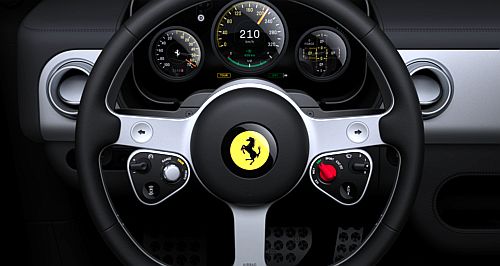 Read more24th of October 2025  One-off Ferrari SC40 channels iconic F40Ferrari Special Projects builds bespoke SC40 supercar for client, underpinned by 296 GTBAll future modelsMotor industry news GoAutoNews is Australia’s number one automotive industry journal covering the latest news, future and new model releases, market trends, industry personnel movements, and international events. |
Click to shareFerrari modelsResearch Ferrari All future modelsMotor industry newsGoAutoNews is Australia’s number one automotive industry journal covering the latest news, future and new model releases, market trends, industry personnel movements, and international events. |


 Alfa Romeo
 Abarth
 Audi
Audi Aston Martin
 BMW
BMW Bentley
 Ferrari
 Chevrolet
 Ford
Ford Fiat
Fiat GWM
GWM Foton
Foton Hyundai
 Honda
Honda Jaguar
 Isuzu
Isuzu Kia
Kia Jeep
Jeep Land Rover
 Lamborghini
 Maserati
 Lexus
Lexus McLaren
 Mazda
Mazda MG
MG Mercedes-Benz
 Mitsubishi
 Mini
Mini Peugeot
 Nissan
 Ram
Ram Porsche
 Rolls-Royce
 Smart
Smart Skoda
Skoda Suzuki
 Subaru
 Toyota
 Tesla
Tesla Volvo
Volvo Volkswagen
 Zeekr
Zeekr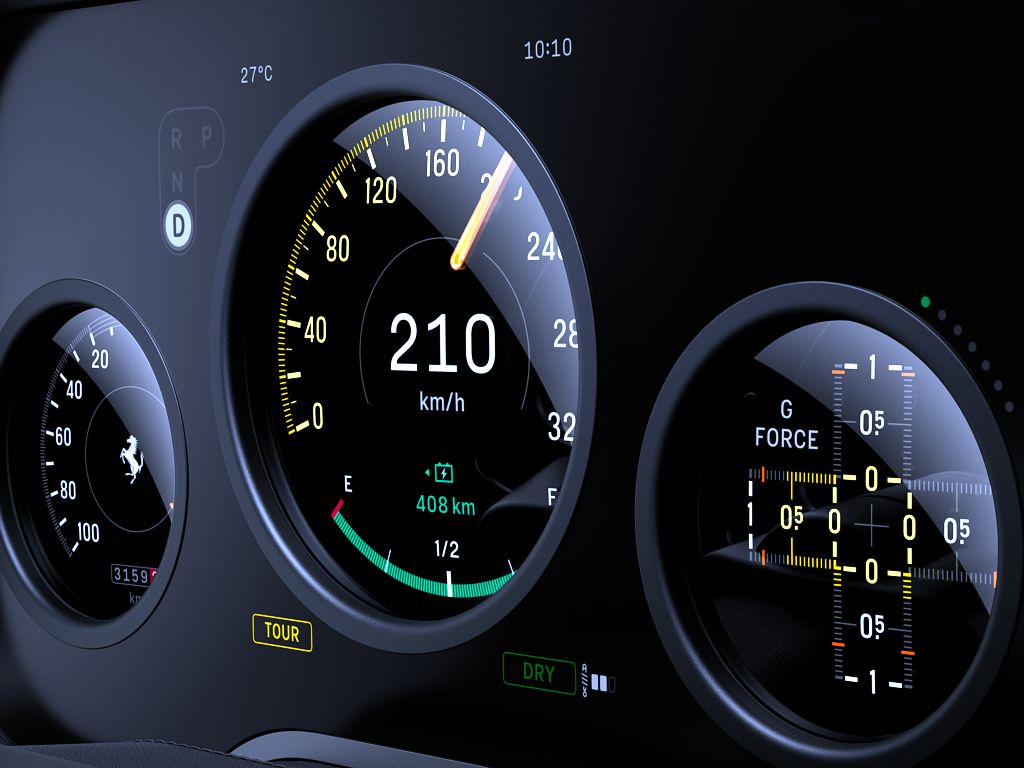

Connect with us


Facebook Twitter Instagram