

Make / Model Search
News - BMWBMW cracks hydrogen packaging problemBavarian marque’s flat-tank breakthrough boosts hydrogen fuel-cell prospects10 Jun 2026 BMW has revealed a breakthrough hydrogen storage system that will underpin its first series-production fuel-cell electric vehicle (FCEV), claiming the innovative design delivers longer range, faster refuelling, and seamless integration into existing vehicle architectures.
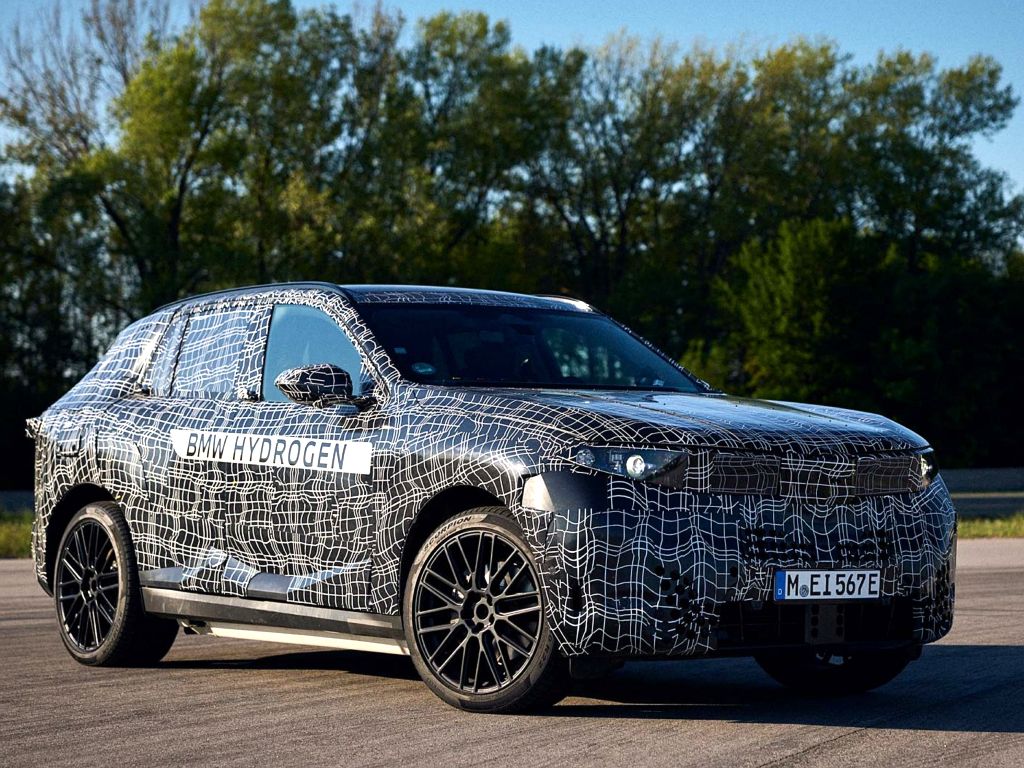
Dubbed BMW Hydrogen Flat Storage, the new system will debut in the production version of the BMW iX5 Hydrogen, which is scheduled to enter series production in 2028.
The German manufacturer says the technology addresses one of the biggest challenges facing hydrogen-powered vehicles – how to package high-pressure hydrogen tanks without compromising cabin space, practicality, or manufacturing efficiency.
Unlike conventional FCEVs that typically rely on large cylindrical tanks, BMW’s new design employs seven slim carbon-fibre reinforced composite pressure vessels connected in parallel and housed within a robust metal frame.
The arrangement allows the entire hydrogen storage system to occupy the same installation space as BMW’s sixth-generation high-voltage battery pack, enabling fuel-cell, battery-electric, plug-in hybrid, and internal combustion variants to be produced on the same assembly line.
BMW says the new tank system stores approximately 7kg of hydrogen at pressures of up to 700bar, providing a driving range of up to 750km while allowing refuelling in less than five minutes.
“Our new storage concept allows us to fit the hydrogen drive system into the new X5 precisely and in a way that saves space,” said BMW AG board member responsible for development Dr Joachim Post.
“Think of it as installation Tetris – every customer gets the drive system best suited to their needs and a true BMW X5 with no compromises.”
The innovative packaging solution forms a key component of BMW’s technology-open vehicle strategy, which aims to offer multiple propulsion systems from a common vehicle architecture.
The next-generation X5 will support five powertrain variants including petrol, diesel, plug-in hybrid, battery-electric, and hydrogen fuel-cell technology.
BMW says shared geometric specifications across energy storage systems and drivetrain components reduce manufacturing complexity and cost while improving scalability.
At the heart of the iX5 Hydrogen is BMW’s latest third-generation fuel-cell system, developed in partnership with Toyota.
The system is more compact, efficient, and powerful than previous iterations and generates electricity by combining hydrogen stored on board with oxygen drawn from the atmosphere.
Electricity produced by the fuel cell powers the vehicle’s electric motor and recharges a small high-voltage buffer battery that stores energy recovered through regenerative braking and provides additional power during acceleration.
BMW says the electric motor used in the hydrogen-powered iX5 is shared with its battery-electric counterpart, further enhancing production synergies.
The hydrogen storage system itself consists of seven Type 4 pressure vessels manufactured from carbon-fibre reinforced composite material wrapped around polymer liners.
Rather than operating independently, the tanks function as a single enclosed storage unit controlled by a central main valve.
BMW says the design improves packaging efficiency, increases range, and has already resulted in several patent applications.
The company believes hydrogen can play a significant complementary role alongside battery-electric vehicles, particularly in markets where long-distance driving, rapid refuelling, and energy diversification are priorities.
“Hydrogen offers electric driving with a long range and fast refuelling, while diversifying energy sources and reducing dependence on a single infrastructure or raw material supply chain,” said BMW in a statement.
The BMW Group has been evaluating hydrogen technology globally through a fleet of approximately 100 iX5 Hydrogen pilot vehicles, with the program providing real-world validation ahead of full-scale production.
BMW explained the successful pilot program has given the company confidence to move forward with series production, making the iX5 Hydrogen the first fuel-cell-powered production model in the brand’s history. The project forms part of BMW’s broader hydrogen strategy and receives funding support from the German Federal Ministry of Transport under the Hy2Move initiative, which aims to accelerate hydrogen mobility technologies across Europe.
When production begins in 2028, the BMW iX5 Hydrogen will become one of the first premium fuel-cell SUVs available globally and a key test of hydrogen’s long-term viability alongside battery-electric propulsion.
It is understood that the flat storage concept will allow hydrogen-powered vehicles to be built alongside conventional and battery-electric models across its global production network, potentially overcoming one of the biggest barriers to wider fuel-cell adoption.  Read more |
Click to shareBMW articlesResearch BMW Motor industry news GoAutoNews is Australia’s number one automotive industry journal covering the latest news, future and new model releases, market trends, industry personnel movements, and international events. |



Connect with us


Facebook Twitter Instagram