

Make / Model Search
OptionsCar reviews - Lexus - NX - 350hLexus modelsOverviewWe like Quality of fit and finish; impressive fuel consumption; practical five-seat cabin; delightful Mark Levinson audio system; charming dynamics; sensible ADAS calibration Room for improvement Steering wheel controls can be difficult to comprehend; irksome high-set driving position; no spare wheel; some road noise on coarse chip surfaces We find out why the Lexus NX is still our pick of the premium mid-sized SUV segment22 Jun 2026 By MATT BROGAN Overview
LEXUS’ latest generation NX has been a popular seller for years offering premium mid-sized SUV buyers a well-rounded five-seat alternative to the likes of the Audi Q5 (from $81,000 plus on-road costs), BMW X3 (from $87,300 + ORC), Genesis GV70 (from $80,300 + ORC), Land Rover Discovery Sport (from $73,595 + ORC), Mercedes-Benz GLC-Class (from $89,000 + ORC), and Volvo XC60 (from $74,990 + ORC).
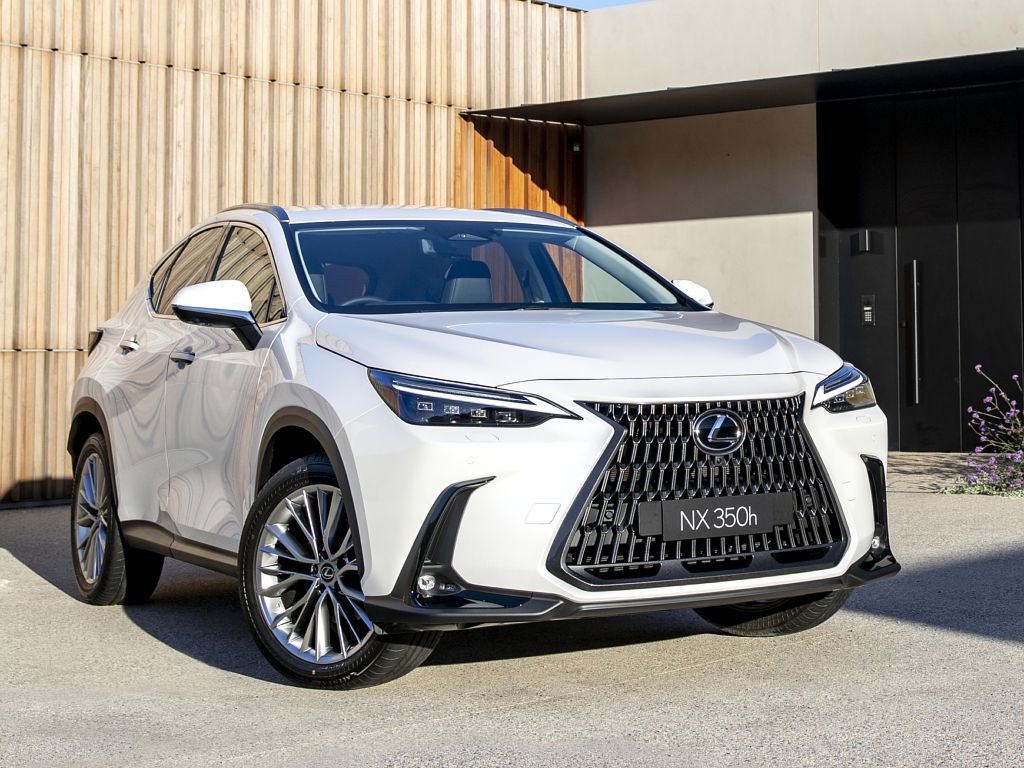
The Japanese luxury marque’s latest NX offering is available from a compelling $63,400 + ORC in its entry grade, rising to $85,000 + ORC for the petrol-electric hybrid 350h Sports Luxury AWD on test (and $96,000 + ORC for the flagship 450+ F Sport AWD PHEV).
Power comes from a 2.5-litre four-cylinder petrol engine and electric motor combination that offers NX 350h AWD buyers a system output total of 179kW/391Nm, driving through a continuously variable transmission (CVT).
Lexus quotes a 0-100km/h acceleration time of 7.7 seconds for the variant on test, and a combined cycle fuel consumption figure of just 5.0 litres per 100km and CO2 emissions of 113 grams per kilometre (noting 95 RON or higher premium unleaded is required to fill the NX’s 55-litre tank).
The vehicle is suspended by the combination of a MacPherson strut front and double wishbone rear arrangement with non-adaptive dampers and is halted by four-wheel disc brakes. The high-voltage battery uses lithium-ion chemistry and is rated at 1.2kWh. It is located beneath the rear seat.
A braked towing limit of 1500kg applies and Lexus lists a cargo capacity of 520 litres with the 60:40 split-fold rear seats in place and 1141 litres all told (noting there is no spare wheel available). The model weighs 1870kg (kerb) and offers a payload of 510kg.
The Lexus NX received a five-star ANCAP safety rating upon release (in 2022) scoring a 91 per cent result in the Adult Occupant Protection category, an 89 per cent result in the Child Occupant Protection category, an 83 per cent result in the Vulnerable Road User Protection category, and a 92 per cent result in the Safety Assist category.
Safety technology highlights include adaptive cruise control with Stop & Go assist, autonomous emergency braking, blind-spot monitoring, driver attention monitoring, front and rear parking sensors, lane centring assist, lane keep assist, and lane departure warning, rear cross-traffic alert, a 360-degree camera system, and a full complement of airbags.
Elsewhere, equipment highlights include 20-inch alloy wheels, tri-beam LED headlights, leather-accented upholstery, ventilation for the front seats, an 8.0-inch digital instrument cluster, 14.0-inch touchscreen infotainment array, colour head-up display, 360-degree camera system, wireless smart phone charging, embedded sat nav, wireless Apple CarPlay and Android Auto connectivity, and an enthralling Mark Levinson 17-speaker audio bundle.
The brand’s Lexus Connected smartphone app which offers access to SOS emergency dialling, automatic collision notification, and stolen vehicle tracking was also applied during the last product regeneration.
The app further allows functions that include remote start, remote locking, and climate control pre-conditioning, alongside geolocation functions, and both horn and lights activation. A three-year subscription is included from the sale date.
Metallic paint attracts a $1750 surcharge for any colour that isn’t Graphite Black. Our test vehicle was also equipped with Lexus’ Enhancement Pack One (essentially a sunroof) at $2307.
All Lexus passenger vehicles are backed by a five-year/unlimited-kilometre warranty. Hybrid and plug-in hybrid variants receive a 10-year/unlimited-kilometre warranty on the high-voltage battery.
Scheduled servicing is set at 12 months or 15,000km (whichever comes first) and totals $3225 over a typical five-year period.
Driving Impressions
As is the case with every Lexus in the current crop, the NX presents exceptionally well with a high-quality finish throughout.
The cabin is well-appointed with a sensible blend of touchscreen and physical controls, and a menu system that is easy to comprehend. Perhaps perplexing is why some menu screens are locked-out while driving (and not always the simpler ones you might expect) where others remain – and the difficult to understand steering wheel controls which operate a multitude of functions.
We found the instrumentation screen a little busy, relying instead on the NX’s more simplistic head-up display in challenging environs.
Outward visibility is mostly good, though like many modern SUVs, the NX does suffer from a poor view through the rakish C- and D-pillars. Fortunately, a useful 360-degree camera system covers any shortfall.
For the most part, we appreciate the space and practicality of the cabin layout but found the driver’s seat to be too highly set for our liking. Seating comfort is otherwise excellent with both the front and rear seats offering excellent contouring and support on sumptuous leather upholstery.
Lexus appears to have invested a great deal of consideration into the level of oddment storage offered in the NX cabin. We especially like the sliding wireless phone charging pad which joins sufficient cup holders, door pockets, lidded cubbies, and a reasonable-sized glove box.
Of course, there are touches you probably won’t consider until you get to live with the car. The hushed yet effective climate control system, the automatically controlled seat and steering wheel heaters, the calibration of the rain-sensing wipers, and the sensibly nuanced driver assistance technologies we were happy to leave in their default setting.
Contrasting that, however, is the automatic high beam control which didn’t quite seem to know when to select high beam or not. We were also somewhat disappointed by the thrum from the 20-inch tyres over coarse chip surfaces, which grates against an almost silent mechanical ensemble.
That petrol-electric hybrid driveline is not only quiet, but also wonderfully progressive and incredibly smooth. It provides ample get-up-and-go and virtually silent unless provoked. The electronically controlled CVT helps to keep the four-cylinder engine steady in its torque band, meaning there’s no hard revving or flaring to speak of.
We were also appreciative of the quick-acting all-wheel drive system which offered up impressive traction during the inclement weather experienced on test. Our week with the car coincided with a very wet week in Victoria’s Central Highlands, showing just how capable Lexus’ on-demand all-wheel drive system is when weather (and road) conditions deteriorate.
The level of grip on offer melds well with a ride that falls just short of being firm. Sharper deformations in the road can expose the NX as a touch brusque, which is mildly disappointing considering how well the vehicle manages other aspects of surfaces found beyond the city limits.
We enjoyed the vehicle’s agile handling and well-braced body control and found the steering appropriately geared for both low- and high-speed manoeuvring. The turning circle of 11.6m is, however, a little on the larger side.
The NX offers powerful braking with a reasonably progressive pedal that is consistent in its feedback regardless of whether the electric motor or petrol engine is in play. Toyota and Lexus have worked very hard to ensure the braking systems of its hybridised vehicles offer this level of consistency and are one of the few manufacturers that continually gets it right.
Finally, it’s the fuel consumption of the NX 350h Sports Luxury AWD that impressed yet again. The fourth-generation self-charging hybrid system might fall a whisker short of the modernity, response, and efficiency offered by the fifth-generation system, but is still an extremely mature and reliable system.
On test, and in Normal mode for the most part, we saw an indicated average of 6.2 litres per 100km, a solid effort considering the higher road speeds (predominantly highway) encountered in wet conditions (meaning greater use of the AWD system and climate control). Given the size of the vehicle and the performance on offer, we feel this is a very impressive result.
Which sums up the NX rather well, really. This is an impressive and reliable vehicle that will happily cover off family duties with very little fuss. It is the second-best seller (by a very narrow margin) to the BMW X3, and a vehicle which at the time of writing accounts for close to 45 per cent of Lexus Australia’s overall sales volume.
With a rap sheet like that, it’s little wonder the Lexus NX is still our pick of the premium mid-sized SUV segment. 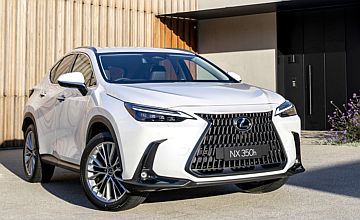 Read more28th of May 2026  Lexus RZ discounting to bolster salesDiscounting and updates of RZ range to drive up sales of Lexus battery electric model27th of May 2026  Lexus wait times blow out to eight monthsDemand outstrips supply as Lexus sees wait times of up to eight months for popular models8th of May 2026  Lexus unveils TZ three-row electric SUV‘Driving Lounge’ – Lexus reveals specifications for its three-row TZ electric family hauler |
OptionsClick to share
|


 Alfa Romeo
 Abarth
 Audi
Audi Aston Martin
 BMW
BMW Bentley
 Ferrari
 Chevrolet
 Ford
Ford Fiat
Fiat GWM
GWM Foton
Foton Hyundai
 Honda
Honda Jaguar
 Isuzu
Isuzu Kia
Kia Jeep
Jeep Land Rover
 Lamborghini
 Maserati
 Lexus
Lexus McLaren
 Mazda
Mazda MG
MG Mercedes-Benz
 Mitsubishi
 Mini
Mini Peugeot
 Nissan
 Ram
Ram Porsche
 Rolls-Royce
 Smart
Smart Skoda
Skoda Suzuki
 Subaru
 Toyota
 Tesla
Tesla Volvo
Volvo Volkswagen
 Zeekr
Zeekr

Connect with us


Facebook Twitter Instagram