

Make / Model Search
Future models - Hyundai - i20 - suvHyundai i20 SUV revealed in BrazilSUV-styled Hyundai i20 gains larger dimensions, upgraded tech; unlikely to reach Aus17 Jun 2026 HYUNDAI has revealed an all-new i20, transforming its smallest passenger car into a larger, more SUV-inspired offering as the South Korean manufacturer responds to changing consumer tastes and the growing popularity of compact crossovers.
Unveiled initially for the Brazilian market, the fourth-generation i20 introduces Hyundai’s new Art of Steel design language and positions itself as a bridge between traditional hatchbacks and compact SUVs.
The new model grows substantially in size and sophistication, adopting a more rugged appearance, expanded interior space, and a suite of technologies previously reserved for larger vehicles.
Hyundai says the newcomer is designed to occupy the space between conventional hatchbacks and compact SUVs, targeting buyers seeking greater practicality and presence without stepping into a larger vehicle category.
“The new Hyundai i20 updates the legacy of one of the brand’s most iconic models worldwide,” the company said in a statement.
“Larger than conventional hatchbacks, it offers ample interior space and comprehensive safety and technology packages, presenting itself as a highly competitive option for those transitioning to the world of SUVs.”
Measuring 4130mm long, 1780mm wide, and 1495mm tall, the new i20 is 55mm longer, 5mm wider, and 55mm taller than the outgoing model, while retaining a 2580mm wheelbase.
The increased dimensions contribute to a more upright stance and improved practicality, with boot capacity growing to 346 litres (and expanding to 1152 litres with the rear seats folded).
A key change lies beneath the sheetmetal, with the i20 moving to Hyundai Motor Group’s third-generation K3 platform shared with models including the Hyundai Kona and next-generation Kia Seltos.
The architecture delivers improved structural rigidity, a lower centre of gravity, and compatibility with future electrified powertrains.
Visually, the i20 adopts styling cues inspired by Hyundai’s latest concepts and electric vehicles.
The front-end is dominated by a full-width LED light bar featuring Hyundai’s new H-Architecture lighting signature, complemented by a gloss black grille, pronounced wheel arches, and strong body surfacing designed to convey both “robustness and aerodynamic efficiency”.
Inside, Hyundai has introduced what it calls a Dynamic Premium Tech design philosophy.
A pair of 12.3-inch digital displays dominate the dashboard, serving as the instrument cluster and infotainment touchscreen, while wireless Apple CarPlay and Android Auto are standard across the range.
The i20 also becomes the first Hyundai built in Brazil to offer over-the-air software updates, allowing owners to receive system enhancements and new features remotely without visiting a dealership.
Connected services are provided through Hyundai’s Bluelink platform, offering features including remote vehicle access, emergency assistance and vehicle status monitoring.
Safety has also been significantly enhanced.
All variants receive as standard six airbags, autonomous emergency braking, lane-keeping assist, lane centring assist, and driver attention monitoring.
Higher-grade models add adaptive cruise control with stop-and-go functionality, blind-spot monitoring, rear cross-traffic assist, and Safe Exit Assist.
Power comes from a choice of naturally aspirated and turbocharged 1.0-litre three-cylinder petrol engines.
The entry-level Kappa engine produces up to 59kW/100Nm, while the direct-injection and turbocharged Kappa TGDI develops 85kW/172Nm, with peak torque available from just 1500rpm.
A special X Line edition will also be offered, featuring gloss black exterior detailing, unique badging, numbered plaques and bespoke interior trim aimed at buyers seeking greater exclusivity.
Australian availability remains uncertain.
The current generation i20 is sold locally exclusively in high-performance N guise, with Hyundai Australia planning to continue sales of the i20 N and i30 N until the end of 2026 despite production having already ceased.
Should the new generation i20 reach Australian showrooms, it would likely be sourced from Europe rather than Brazil and could provide Hyundai with a compelling alternative to vehicles such as the Toyota Yaris, Volkswagen Polo, and Suzuki Swift. 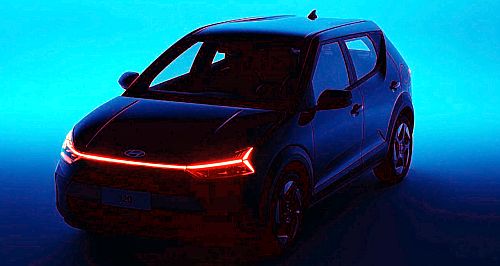 Read more16th of June 2026  Hyundai i20 N Shadow Edition a fitting farewellCurrent-gen Hyundai i20 N farewelled with limited-run Shadow Edition from $41,5005th of June 2026  $8000 slashed from Hyundai EVsRepositioned Hyundai Kona Electric and Ioniq 5 ranges sharpen value equation1st of June 2026  2026 Hyundai Santa Fe Hybrid AWD ReviewBoxy but good, Hyundai’s hybridised Santa Fe AWD carryall ticks most of the boxes24th of May 2026  2026 Hyundai Elexio Elite ReviewTwo opinions, two road testers – we take a close look at Hyundai’s Elexio EliteAll future modelsMotor industry news GoAutoNews is Australia’s number one automotive industry journal covering the latest news, future and new model releases, market trends, industry personnel movements, and international events. |
Click to shareHyundai modelsResearch Hyundai All future modelsMotor industry newsGoAutoNews is Australia’s number one automotive industry journal covering the latest news, future and new model releases, market trends, industry personnel movements, and international events. |


 Alfa Romeo
 Abarth
 Audi
Audi Aston Martin
 BMW
BMW Bentley
 Ferrari
 Chevrolet
 Ford
Ford Fiat
Fiat GWM
GWM Foton
Foton Hyundai
 Honda
Honda Jaguar
 Isuzu
Isuzu Kia
Kia Jeep
Jeep Land Rover
 Lamborghini
 Maserati
 Lexus
Lexus McLaren
 Mazda
Mazda MG
MG Mercedes-Benz
 Mitsubishi
 Mini
Mini Peugeot
 Nissan
 Ram
Ram Porsche
 Rolls-Royce
 Smart
Smart Skoda
Skoda Suzuki
 Subaru
 Toyota
 Tesla
Tesla Volvo
Volvo Volkswagen
 Zeekr
Zeekr

Connect with us


Facebook Twitter Instagram